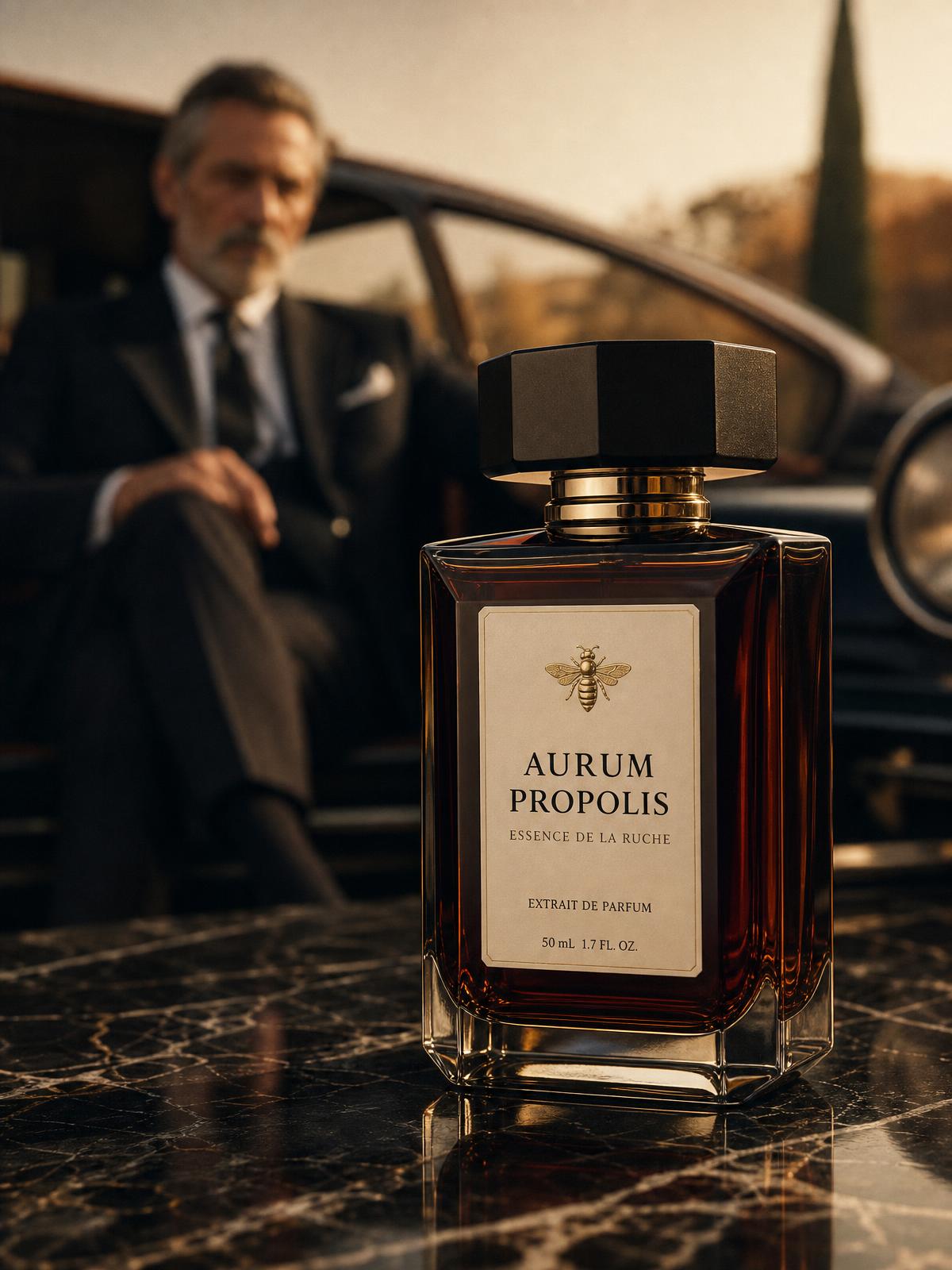
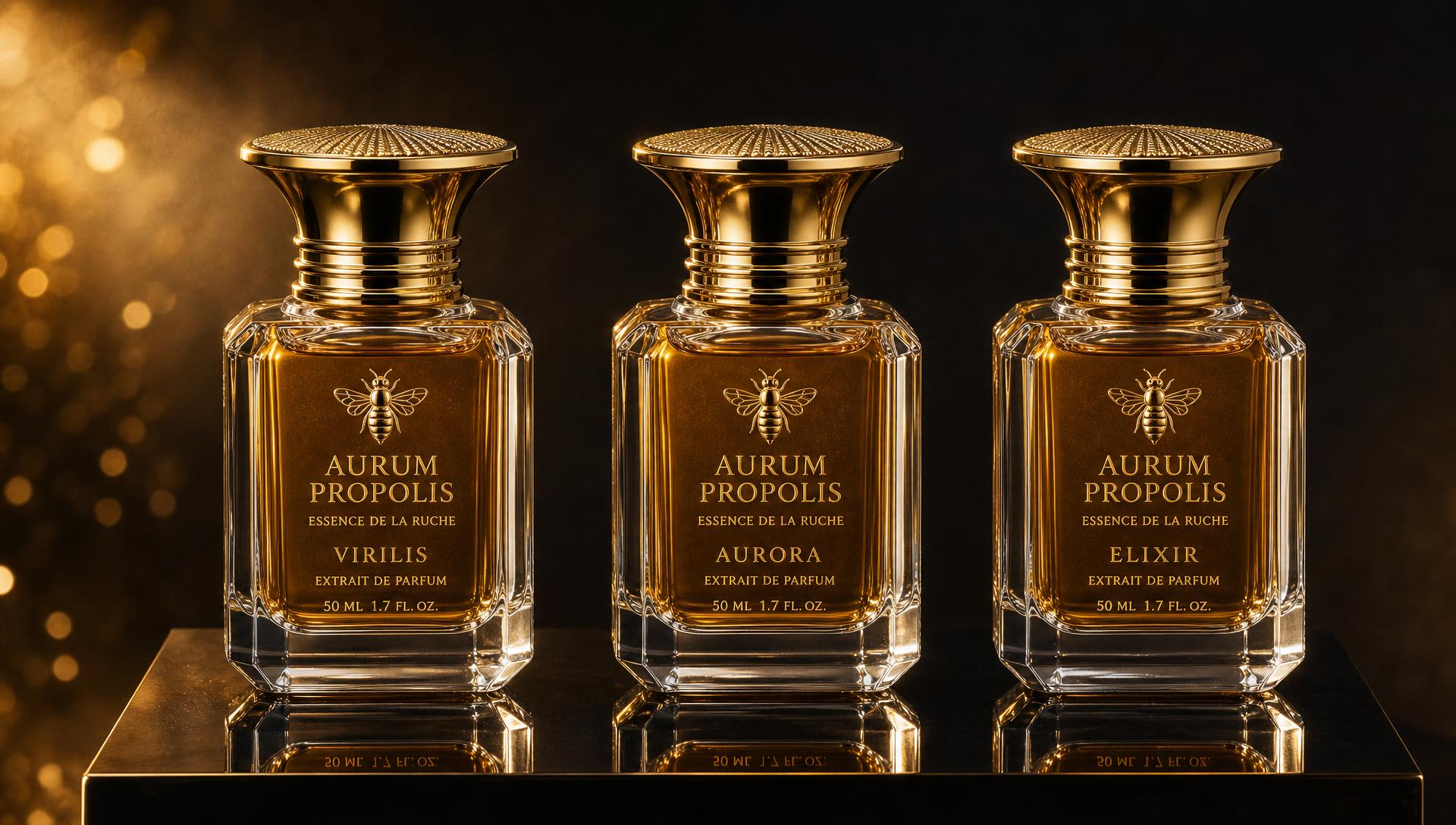
A material older than perfumery.
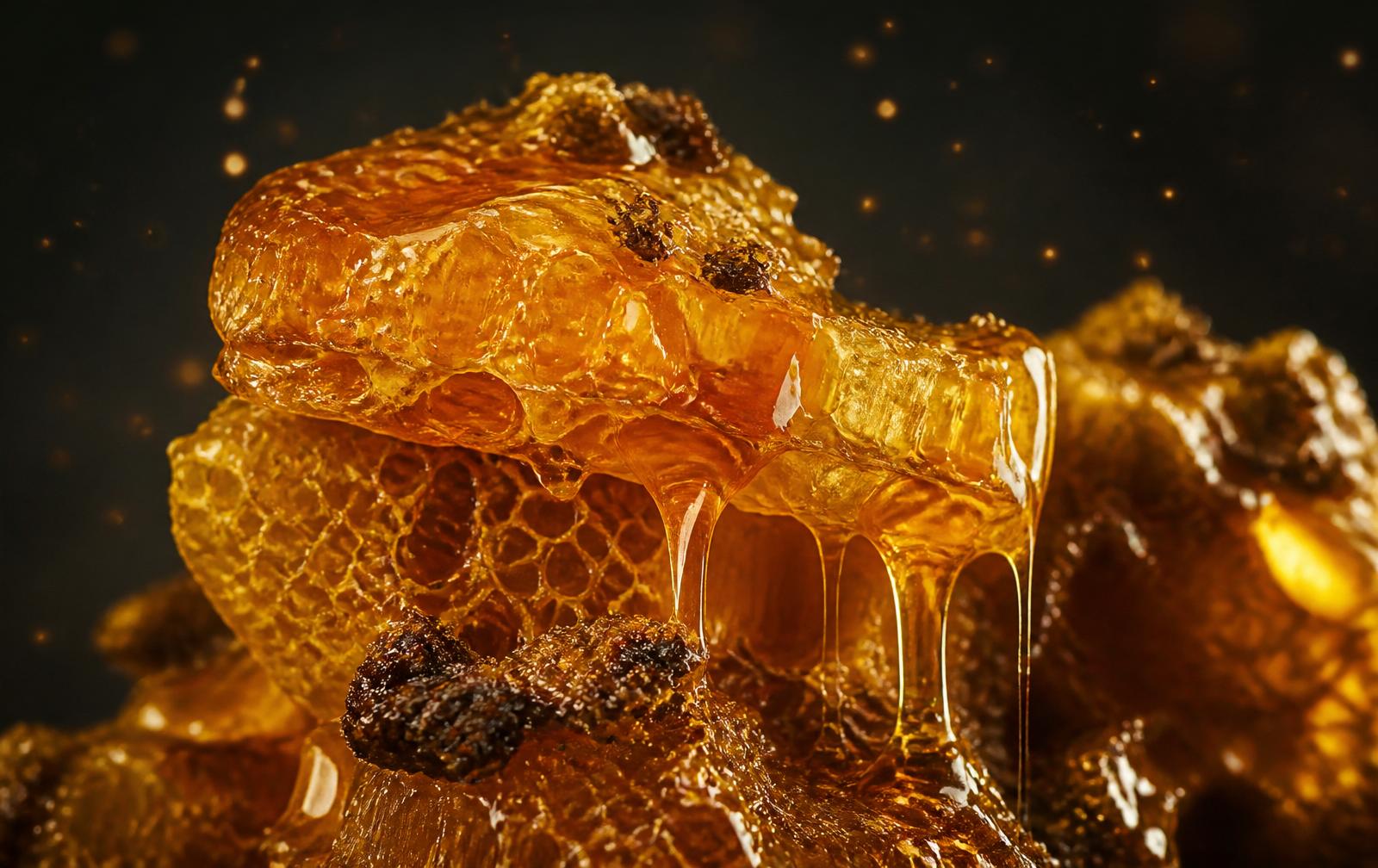
Long before the alembics of Grasse, before the resins of Arabia crossed the great deserts, propolis was already being harvested from the bark of Mediterranean poplars and Australian eucalypts. Bees gather this resin — pro-polis, "in defence of the city" — to varnish the interior of the hive, sealing every crevice against pathogen and time. It is, in effect, the defence of a colony rendered material.
The chemistry of gold.
Modern analysis has counted more than three hundred active molecules in raw propolis — flavonoids, phenolic acids, aromatic terpenes. Together they form one of the most potent flavonoid complexes found in resin. In fragrance, they lend a warm, faintly smoked amber depth impossible to synthesise — a sillage that seems to breathe with the wearer.
Composed with the living.
Around the propolis heart we gather materials that have earned their place through centuries of use: Australian sandalwood, cold-pressed Calabrian bergamot, Bulgarian rose absolute, Sicilian neroli, orris root aged for six years. Each is chosen not for its cost but for its living quality — the way it continues to change on skin, hour after hour, like a garden in slow bloom.
"To wear Aurum Propolis is to carry, on the skin,
a whisper of the hive's oldest secret."